誤差要在哪裡發生——一座中島的切割
Every cut is a decision about where the error goes.
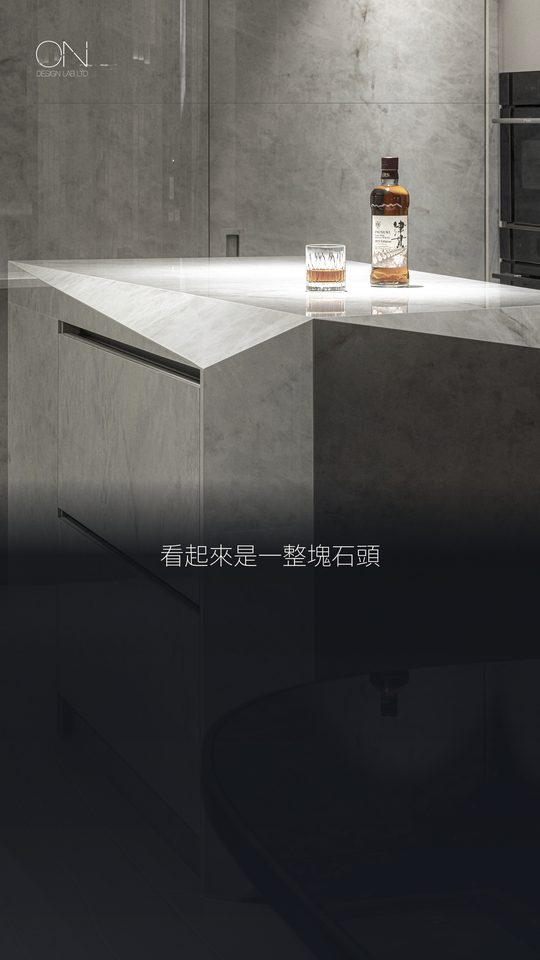
上一篇那座中島,是怎麼被切出來的。
現場是最貴的地方
多面切角的量體,傳統做法是廚具外面先做一層木作造型,上面鋪夾板在現場放樣,每一塊的角度都描下來,再帶回工廠一片一片切。夾板很薄,合起來還是有貼工的差,對接的地方只能現場再磨、再調。問題不在手藝,在於這種方式把判斷留到最後——而現場是最貴的地方。改一次的代價不只是那一道工,是後面所有工序都往後推。
把規則移到圖面上
我們把整個形體丟回數位模型裡算。每個切面的角度、交會的稜線、板材的展開尺寸,在圖面階段全部定死。定案之後直接用切割機下料做底,現場拿到的是已經對得起來的構件,工班負責的只剩組裝與收邊。
這不是為了省工,是為了決定誤差要在哪裡發生。同樣一個造型,用放樣的方式做,時間花在反覆試錯;用算的方式做,時間花在前期,但只花一次。誤差不會消失,它只是被移到一個便宜的地方發生。
「一個能被算出來的形狀,才是一個能被做第二次的形狀。」
帶平面圖來,我們一起看。
A faceted volume is traditionally mocked up on site: a rough form is built, proportions are judged, what looks wrong is cut away and rebuilt. The problem is not craftsmanship — it is that the method leaves the judgement until last, and the site is the most expensive place to make it. We took the whole geometry back into the model: the angle of each facet, the lines where they meet, the flat dimensions of every panel, all fixed at drawing stage and cut on machine. What arrived on site were components that already fit. This is not about saving labour. It is about deciding where the error is allowed to happen. The error does not disappear; it is moved somewhere cheap. A shape that can be calculated is a shape that can be built a second time.