這不是一面發光的牆,是一塊只在特定位置亮起來的石頭
The stone lights up only where it can.
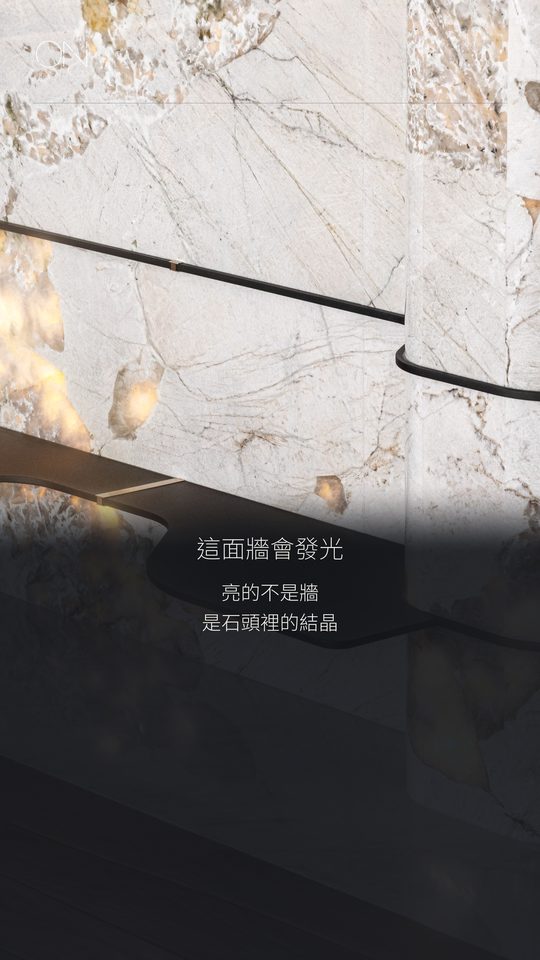
進門第一眼是兩件事並排:一面厚的,一面透的。
厚的是一整面石材牆,透的是三面可視的魚缸。這兩樣東西決定了這個家的重心——重量集中在一處,其餘的地方才空得起來。這一篇只談厚的那一面。
厚度是怎麼被做出來的
石材牆的重點不在弧線,在厚度怎麼被做出來。轉角全部收成圓的。石材收直角,眼睛會讀成兩片拼在一起;收圓角才是一整片,紋路繞著圓弧是連的,厚度因此渾厚,不銳利。
進門那支大樑用的是同一個判斷。它是兩戶合併之後留下來的結構,我們沒有包起來假裝它不存在,而是用消圓把稜角化掉,燈帶沿著它走,材質在交界處換手。
光只從石英結晶透出來
好看的不是紋,是石頭裡一團一團的石英結晶。沒點燈時是灰褐色的斑;燈一亮,光只從石英透出來,變成蜜色,底幾乎不透。
所以要控的從來不是石頭,是燈。均勻的是燈的分布,不是牆的亮度——分布對了,石面上才不會看見燈管的熱點。做得到靠的不是燈具選得好,是牆的內部先被解決:出光位置、散熱路徑、檢修動線,在結構階段一次決定完。
那兩道鋼板不是呼應,是支撐
牆上橫著兩道黑色鋼板。它們不是拿來跟石材做材質呼應的,它們是底。
這面牆沒有掛電視,改用雷射電視,不讓一塊黑色矩形切掉整面石材。下面那道鋼板凸出來,是主機的檯面;上面那道是上半部整片石材的底。石材因此是三片,兩道鋼板既是它的分界,也是它的支撐。下層石材先固定,鋼板接上去,最後把上半部整片鋪上。分割線沒有多出來,因為分割線就是鋼板本身。
「這不是一面發光的牆,是一塊只在特定位置亮起來的石頭。」
你家最貴的那面牆,如果把燈關掉,還好看嗎?
帶平面圖來,我們一起看。
At the door, two things stand side by side: one thick, one transparent. On the thick one, the point is not the curve but how the thickness was made — every corner is turned round, because a square edge in stone reads as two slabs butted together while a rounded one reads as a single piece. What carries the wall is not the veining but the quartz gathered in clusters through it: unlit they are grey-brown blotches, lit they turn honey-colored, while the body of the stone stays close to opaque. So what has to be controlled is never the stone but the lamps. And the two black steel plates crossing the wall are not an echo of the stone; they are the bed beneath it, the lower serving as the ledge for the laser TV unit and the upper as the base for the single sheet of stone above.